
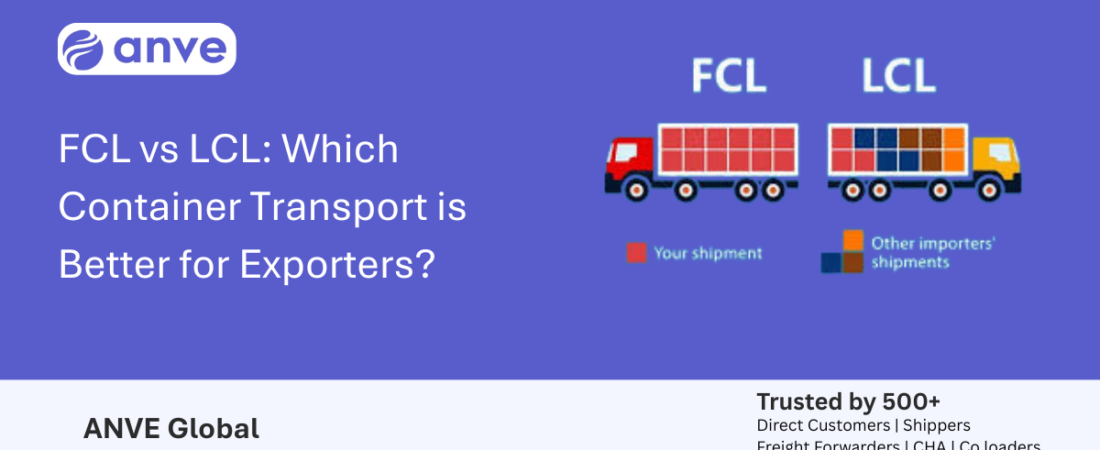
For businesses involved in international trade, choosing the right container shipping method is an important logistics decision. Exporters and importers typically choose between FCL (Full Container Load) and LCL (Less than Container Load) depending on shipment volume, cost considerations, and delivery timelines.
Understanding the difference between FCL vs LCL container transport can help businesses optimize their logistics costs and improve shipment efficiency.
What is FCL (Full Container Load)?
FCL shipping refers to a container that is exclusively used by one shipper. The entire container is booked for a single shipment, even if the cargo does not completely fill the container.
In this model, the container is sealed at the shipper’s facility or warehouse and transported directly to the port for export.
Advantages of FCL Shipping
✔ Faster transit and handling
✔ Reduced risk of cargo damage
✔ Better security for high-value shipments
✔ Suitable for large cargo volumes
FCL is commonly used by manufacturers, large exporters, and companies shipping bulk cargo.
What is LCL (Less than Container Load)?
LCL shipping is used when the shipment volume is not large enough to fill an entire container. In this case, cargo from multiple exporters is consolidated into a single container by a freight forwarder or consolidator.
Once the container reaches the destination port, it is moved to a Container Freight Station (CFS) where shipments are deconsolidated and delivered to individual consignees.
Advantages of LCL Shipping
✔ Cost-effective for small shipments
✔ Ideal for growing exporters
✔ Flexible shipment volumes
✔ Access to global shipping without large cargo requirements
LCL shipments are widely used by small and medium exporters, freight forwarders, LCL consolidators, and co-loaders.
Key Differences Between FCL and LCL
| Factor | FCL | LCL |
|---|---|---|
| Container Usage | Single shipper | Shared container |
| Shipment Size | Large volume | Small to medium volume |
| Cost Structure | Fixed container cost | Pay for cargo space used |
| Handling | Minimal handling | Multiple handling points |
| Transit Time | Usually faster | Slightly longer due to consolidation |
The right option depends on cargo size, urgency, and shipping budget.
Importance of Reliable Container Transportation
Regardless of whether a shipment is FCL or LCL, efficient road transportation between the factory, port, CFS, and warehouse plays a critical role in ensuring smooth export and import operations.
Delays in container trucking or cargo pickup can affect shipping schedules and increase logistics costs.
This is why exporters and freight forwarders often rely on experienced transportation partners who understand port procedures and time-sensitive cargo movements.
For example, transportation providers like ANVE Global Logistics support exporters, freight forwarders, LCL consolidators, and co-loaders with reliable container trucking and LCL cargo delivery across major Southern India ports such as Chennai, Ennore, Tuticorin, and Cochin.
By ensuring timely container pickup and delivery, businesses can keep their international supply chain running smoothly.
Final Thoughts
Both FCL and LCL shipping play an important role in global trade. Large exporters may prefer FCL for speed and security, while growing businesses often rely on LCL to ship smaller cargo volumes efficiently.
Choosing the right transport and logistics partner helps ensure that containers move smoothly between factories, ports, and distribution centers.
For exporters and freight forwarders looking for reliable container transportation and LCL cargo delivery support in South India, working with an experienced transport partner can make a significant difference in maintaining shipment schedules.
📩 Transport inquiries:
info@anveglobal.com